Business Cycles (Recessions and Expansions)
Business cycles are influenced by various factors such as government policies, global economic conditions, consumer confidence, technological changes, and financial market trends. These cycles help policymakers and businesses make better economic decisions and prepare for future economic conditions. Understanding business cycles is essential for governments, businesses, investors, and individuals because they help predict economic trends and manage financial risks effectively.
Introduction
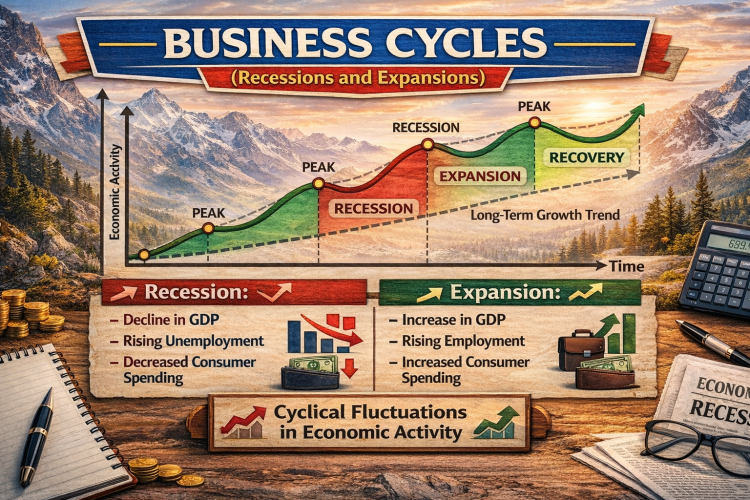
A business cycle refers to the fluctuations in economic activity that an economy experiences over a period of time. These fluctuations involve periods of economic growth (expansion) and economic decline (recession). Business cycles are a natural feature of every economy and affect factors such as employment, production, income, investment, and consumer spending.
Economists study business cycles to understand how economies grow and contract. The cycle reflects changes in Gross Domestic Product (GDP), industrial production, employment rates, and business investments. When the economy grows, businesses expand production and employment increases. However, during downturns, production slows, unemployment rises, and economic activity declines.
Meaning of Business Cycle
A business cycle is the recurring pattern of expansion and contraction in economic activity over time. It represents the rise and fall of economic growth measured by indicators like GDP, employment, and production.
In simple terms, a business cycle shows how the economy moves through periods of prosperity and periods of slowdown. During expansion, economic activity increases, while during recession, economic activity decreases.
Business cycles are not fixed in duration. Some cycles may last several years, while others may be shorter or longer depending on economic conditions.
Economists generally divide the business cycle into four major phases:
-
Expansion
-
Peak
-
Recession
-
Recovery (or Trough to expansion)
Each phase has unique characteristics and economic impacts.
Phases of Business Cycle
1. Expansion Phase
Expansion is the phase where the economy grows and economic activity increases. During this stage, businesses experience higher demand for goods and services, which leads to increased production and employment.
Key Features of Expansion
• Increase in GDP growth
• Rise in employment opportunities
• Higher consumer spending
• Growth in industrial production
• Increase in business investments
• Rising income levels
• Improved business confidence
During expansion, companies hire more workers and invest in new technologies and infrastructure. Consumer demand increases because people have higher incomes and confidence in the economy.
Stock markets often perform well during expansion because businesses generate higher profits. Governments also collect more tax revenue due to increased economic activity.
However, if expansion continues for too long without proper control, it can lead to inflation, where prices of goods and services rise rapidly.
Peak Phase
The peak represents the highest point of economic activity in the business cycle. At this stage, the economy reaches its maximum growth before it begins to slow down.
Characteristics of Peak Phase
• Highest level of GDP growth
• Maximum employment levels
• Strong business profits
• High consumer demand
• Increasing inflation
• Rising interest rates
During the peak phase, the economy may start showing signs of overheating. Inflation may increase because demand exceeds supply. Central banks often respond by increasing interest rates to control inflation.
Eventually, economic growth slows down as businesses reduce investments and consumers begin to spend less.
Recession Phase
A recession is a period of economic decline where economic activity decreases for a sustained period. Economists generally define a recession as two consecutive quarters of negative GDP growth.
During a recession, businesses reduce production due to declining demand. Companies may cut costs by reducing workforce or postponing investments.
Features of Recession
• Decline in GDP
• Rising unemployment
• Decrease in consumer spending
• Falling business profits
• Reduced industrial production
• Lower investment levels
• Declining stock markets
Recessions can be caused by various factors such as financial crises, global economic shocks, high inflation, or sudden declines in consumer confidence.
For example, the global financial crisis of 2008 caused a major recession in many countries around the world.
Governments and central banks often respond to recessions by implementing stimulus measures, such as reducing interest rates, increasing government spending, or providing financial support to businesses.
Trough and Recovery Phase
The trough represents the lowest point of economic activity in the business cycle. After this stage, the economy begins to recover and move toward expansion again.
Characteristics of Recovery
• Gradual increase in GDP
• Rising employment levels
• Improvement in consumer confidence
• Increased business investments
• Growth in industrial production
During recovery, businesses begin expanding again as demand slowly increases. Governments often introduce policies to encourage economic growth, such as infrastructure spending and tax incentives.
As the recovery strengthens, the economy eventually enters the expansion phase, and the business cycle begins again.
Causes of Business Cycles
Business cycles occur due to several economic factors that influence production, demand, and investment.
1. Changes in Consumer Demand
Consumer spending is a major driver of economic activity. When consumers spend more, businesses increase production, leading to economic expansion. When spending decreases, businesses reduce output, causing economic slowdown.
2. Investment Fluctuations
Business investment in machinery, technology, and infrastructure can significantly influence economic growth. High investment leads to expansion, while reduced investment contributes to recession.
3. Government Policies
Government fiscal and monetary policies play an important role in shaping business cycles. Policies such as taxation, government spending, and interest rate changes can either stimulate or slow down economic activity.
4. Technological Innovations
Technological advancements can create new industries and increase productivity, leading to economic growth and expansion.
5. Financial Market Conditions
Stock market fluctuations, banking crises, or credit shortages can influence investment and consumer confidence, affecting economic activity.
6. Global Economic Events
International trade disruptions, wars, pandemics, and global financial crises can trigger economic downturns across multiple countries.
Indicators of Business Cycles
Economists use several indicators to measure and analyze business cycles.
1. Gross Domestic Product (GDP)
GDP measures the total value of goods and services produced in an economy. Changes in GDP indicate economic expansion or contraction.
2. Employment Levels
High employment indicates economic growth, while rising unemployment signals economic slowdown.
3. Industrial Production
Increases in industrial production reflect economic expansion, while decreases indicate recession.
4. Consumer Confidence Index
This index measures how optimistic consumers feel about the economy and their financial situation.
5. Inflation Rate
Inflation levels often rise during economic expansion and fall during recession.
Impact of Business Cycles
Business cycles affect different sectors of the economy in various ways.
Impact on Businesses
Businesses experience higher profits during expansion but may face losses during recession. Companies must adapt their strategies to survive economic downturns.
Impact on Employment
During expansion, employment opportunities increase, while recessions lead to layoffs and rising unemployment.
Impact on Investors
Stock markets generally perform well during expansion and decline during recessions.
Impact on Government
Governments face higher tax revenues during expansion but may experience budget deficits during recession due to increased public spending.
Role of Government in Managing Business Cycles
Governments and central banks play a crucial role in stabilizing the economy during different phases of the business cycle.
Fiscal Policy
Fiscal policy involves government spending and taxation decisions to influence economic activity.
During recessions, governments may increase spending on infrastructure projects and reduce taxes to stimulate demand.
Monetary Policy
Central banks control interest rates and money supply to maintain economic stability.
Lower interest rates encourage borrowing and investment, while higher interest rates help control inflation.
Examples of Business Cycles
Several historical events illustrate the impact of business cycles.
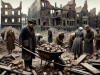
The Great Depression (1929)
The Great Depression was one of the most severe economic downturns in history. It led to massive unemployment, bank failures, and a significant decline in global economic activity.
The Global Financial Crisis (2008)
The collapse of major financial institutions triggered a worldwide recession. Governments implemented large stimulus programs to stabilize the economy.
COVID-19 Economic Recession (2020)
The pandemic caused a sudden decline in economic activity due to lockdowns and disruptions in global supply chains.
What's Your Reaction?