US-Israel War on Iran
Security threats claimed by U.S. and Israeli leaders ✈️ Long-term rivalry and ideologies going back decades. Diplomatic failures and regional power calculations. Ambitions to influence or change Iran’s government. Domestic political dynamics within both the U.S. and Israel.
What is happening now in the US-Israel–Iran conflict?
According to major news sources:
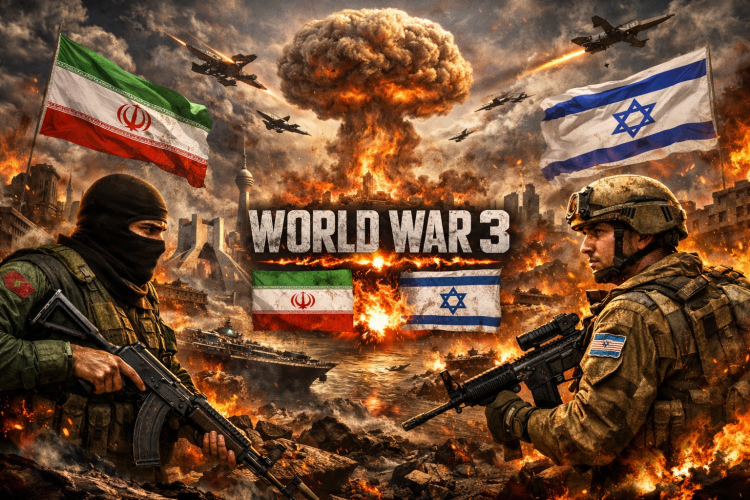
➡️A large-scale military offensive was launched on February 28, 2026, involving coordinated air and missile strikes by the United States and Israel against Iran. These strikes targeted Iranian military infrastructure and leadership, reportedly including the compound of Supreme Leader Ayatollah Ali Khamenei, who according to some reporting appears to have been killed or seriously wounded in the attack.
➡️Iran retaliated with ballistic missiles, drones, and attacks on Israeli territory and U.S. military bases throughout the Gulf region.
➡️ The conflict is serious enough that media organizations and analysts are now referring to it as a war due to the scale, intensity, and mutual hostile acts.
Long-Term Roots of the Conflict — Historical Context
To understand why the U.S. and Israel are now at war with Iran, we have to go back decades:
a) Historic rivalry
-
Iran and Israel have been strategic adversaries since Iran’s Islamic Revolution in 1979, largely because Iran rejects Israel’s legitimacy and Israel sees Iran as an existential security threat.
-
Iran has invested in regional proxies like Hezbollah and groups in Iraq and Syria that have repeatedly clashed with Israel and U.S. interests.
b) Nuclear dispute
-
The U.S. and Israel have long claimed that Iran’s nuclear program could produce weapons — something Tehran denies. These fears drove past negotiations, sanctions, and intelligence operations.
c) Proxy wars and military escalation
-
Prior clashes — including the June 2025 Iran–Israel conflict — escalated the shadow war between Tehran and Jerusalem.
➡️The Legality of Attacking Iran
Susan M. Akram, ACW Non-resident Fellow; Professor, Boston University
- The US-Israeli attacks on Iran cannot be legally justified under any theory of the laws of war. All members of the United Nations are prohibited by Article 2(4) of the UN Charter from threatening or using force against the territory or independence of another state. Under the Charter, only the Security Council has the authority to trigger the use of force against a member state if that state has breached international peace.
- The sole exception to this is under Article 51, which permits the use of force in self-defense, but only in response to an armed attack. Whether a state can attack another because it believes it will be attacked has been heavily debated, but what is clear is that international law does not justify attacking another country for any of the shifting reasons that the United States has suggested for the war.
- So far, these are: changing the regime; protecting Iranian citizens from their own government’s atrocities; ending Iran’s ballistic missiles program; or preventing the development of putative nuclear weapons for which there is no credible evidence.
- Iran has neither attacked the United States nor threatened to do so without being attacked first. The United States cannot therefore use self-defense as a legal justification for starting the war. The United States has carried out regime change in many countries before, including helping to overthrow Iranian Prime Minister Mohammad Mossadegh in 1953.
➡️Yet none of these instances was authorized by the UN, as regime change has no basis in international law and cannot be used to justify the use of force. Protecting Iranians from mass atrocities similarly lacks support in the UN Charter. In 2005, all UN member states committed to a document known as the Responsibility to Protect (R2P), which asserted that collective action might be needed when citizens of a country were facing mass atrocities at the hands of their own government.
➡️However, R2P was a re-commitment to collective action under the UN Charter, not outside of it; any such intervention would still require UN authorization. The alleged threat of nuclear weapons being developed by Iran has been debunked by negotiators of the 2015 Iran deal themselves, the US Defense Intelligence.
Theory A: Pre-Emptive Security Logic
This argument holds that:
➡️ The U.S. and Israel believed Iran posed an imminent military threat — especially due to missile forces, drones, and nuclear-related facilities.
➡️In this view, leaders like U.S. officials argued that striking first was necessary to prevent future Iranian attacks on Israel or U.S. forces.
This is a classic pre-emptive war doctrine, where leadership claims a future attack is more dangerous if allowed to develop.
Critics of this theory argue that international law does not clearly justify such action unless there has already been an armed attack, which Iran had not done first.
Theory B: Regime Change Strategy
Another influential interpretation says:
➡️The U.S. and Israel see Iran’s Islamic Republic as destabilizing the region — backing militant groups and opposing U.S./Israeli interests.
➡️The removal of key leadership (like Khamenei) suggests a strategic objective beyond tactical defense — perhaps aiming to dismantle Iran’s governing system entirely.
Proponents argue this could weaken Iran’s regional influence, similar to past regime change campaigns.
Theory C: Strategic Timing due to Diplomatic Breakdown
Some analysts view the timing as opportunistic:
➡️ Diplomatic talks mediated by third parties (e.g., Oman and Switzerland) were underway earlier in 2026 but collapsed without agreement.
➡️ With negotiations failing and Iran under internal pressure (e.g., protests), some U.S. and Israeli officials judged that coercive force was the only remaining option.
In this view, leaders felt diplomatic tools were exhausted — raising the risk of conflict.
Theory D: Domestic Political Calculus
A more political theory suggests:
➡️ U.S. and Israeli leaders might see foreign military action as beneficial domestically — for rallying support, messaging, or deflecting internal challenges.
Experts note low public support in the U.S. for involvement in another Middle East war, but political leaders might still pursue it for other reasons.
Broader Regional and Global Implications
➡️ Regional escalation: Iran has myriad allied or proxy groups across the Middle East — including Hezbollah in Lebanon — raising the risk of wider conflict.
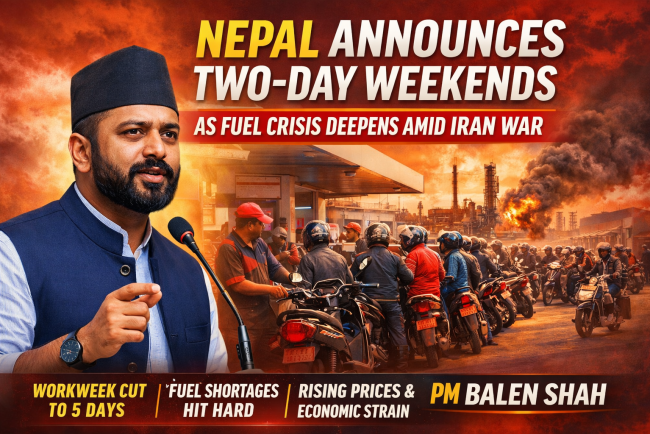
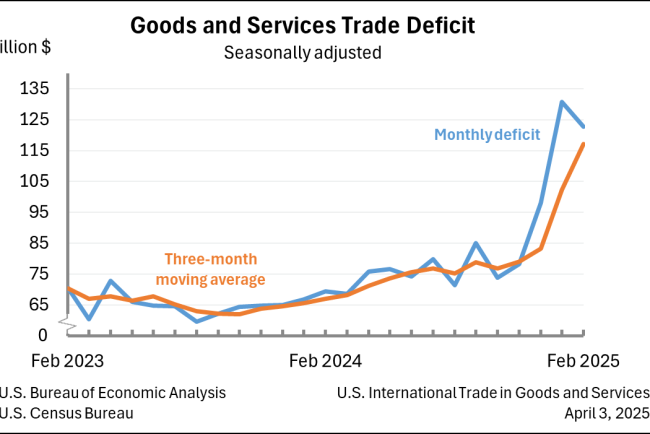
➡️ Oil markets & global economy: Disruption near the Strait of Hormuz, through which a large portion of global oil passes, can cause global price volatility.
➡️ International law debates: Legal scholars argue the initial strikes challenge norms about just war and the UN Charter’s rules on the use of force.
What's Your Reaction?