Nepal announces two-day weekends as fuel crisis caused by Iran war deepens.
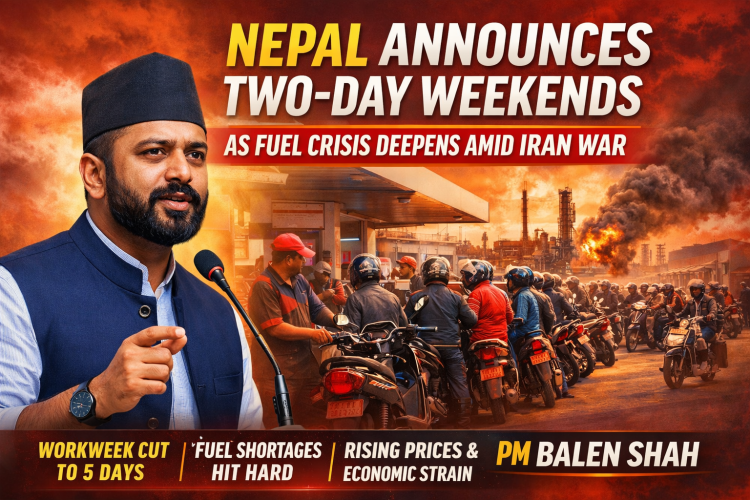
April 2026 Nepal has introduced a two-day weekend for government offices and educational institutions in response to a worsening fuel crisis triggered by the ongoing conflict in the Middle East involving Iran. The decision marks a significant shift in the country’s traditional work schedule and reflects growing pressure on energy supplies across South Asia.
Government Cuts Workweek to Conserve Fuel
In an emergency cabinet meeting, Nepal’s government decided to reduce the working week from six days to five. Previously, Saturday was the only weekly holiday, but now both Saturday and Sunday will be observed as days off.
Officials stated that the move is aimed at reducing fuel consumption amid severe supply disruptions. Government offices will operate from 9:00 AM to 5:00 PM from Monday to Friday to compensate for the reduced working days.
The policy applies to public institutions, including schools and administrative offices, although essential services are expected to continue functioning.
Fuel Supply Disruptions Linked to Iran War
hich has disrupted global oil supply chains. Countries heavily dependent on imported fuel—like Nepal—are facing sharp price increases and shortages.
Nepal relies almost entirely on fuel imports, primarily from India, making it highly vulnerable to global price shocks and supply interruptions.
Petrol and diesel prices have surged in recent weeks, while cooking gas supplies have been rationed. In some cases, authorities have distributed partially filled gas cylinders to extend limited reserves.
Economic and Social Impact
The fuel shortage is already affecting multiple sectors of the Nepali economy:
- Transportation: Rising fuel costs have increased public transport fares and disrupted mobility.
- Aviation: Aviation fuel prices have more than doubled, leading to higher airfares.
- Tourism: Nepal’s tourism-dependent economy faces potential setbacks as travel costs rise.
The government hopes that reducing commuting days will help ease pressure on fuel demand while maintaining administrative efficiency.
Part of a Wider Regional Crisis
Nepal is not alone in implementing emergency measures. Several countries across Asia have adopted similar strategies to cope with the energy crunch:
- Sri Lanka has introduced a four-day workweek.
- Bangladesh has reduced operating hours for institutions.
- India is facing LPG shortages and rising fuel costs.
The broader crisis has been driven by disruptions in key oil transit routes, including the Strait of Hormuz, which handles a significant portion of global energy shipments.
What's Your Reaction?