Russian Strikes Kill 10 as Ukraine Targets Oil Infrastructure, Says Volodymyr Zelenskyy
This topic highlights the escalating tensions in the ongoing conflict between Russia and Ukraine, where recent Russian strikes have resulted in multiple civilian deaths and widespread damage. In response, Ukraine has intensified its strategy by targeting Russian oil tankers and fuel terminals, aiming to weaken the country’s economic and military capabilities. Ukrainian President Volodymyr Zelenskyy emphasized that these actions are part of a broader effort to counter ongoing aggression and disrupt critical energy resources. The situation reflects a shift in the nature of warfare, where economic and energy infrastructure are becoming key targets alongside traditional military operations. Overall, this development underscores the growing intensity of the conflict, its humanitarian consequences, and its potential impact on global energy markets and geopolitical stability.
Detailed Summary
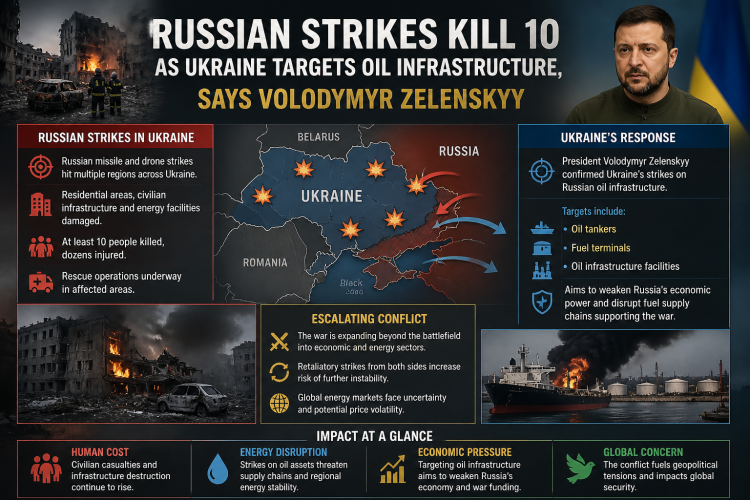
The ongoing war in Ukraine has intensified with a fresh wave of violence marked by deadly Russian strikes and Ukraine’s counterattacks on energy infrastructure. According to Ukrainian officials, at least 10 people were killed in recent Russian attacks, highlighting the continued human cost of the conflict.
Russian Strikes and Civilian Impact
Russian forces carried out missile and drone strikes targeting urban and strategic areas across Ukraine. These attacks hit:
- Residential buildings
- Civilian infrastructure
- Energy-related facilities
The strikes resulted in casualties and injuries, further worsening the humanitarian situation. Emergency services were deployed to affected regions to rescue survivors and assess damage. The attacks reflect Russia’s ongoing strategy of exerting pressure on Ukraine through both military force and infrastructure disruption.
Ukraine’s Response: Targeting Oil Infrastructure
In response, Ukraine has escalated its counteroffensive by targeting Russian oil infrastructure, including:
- Oil tankers
- Fuel terminals
President Volodymyr Zelenskyy confirmed these actions, describing them as part of Ukraine’s broader effort to weaken Russia’s economic and logistical capabilities. By striking oil assets, Ukraine aims to:
- Disrupt fuel supply chains
- Increase economic pressure on Russia
- Limit resources available for military operations
This marks a strategic shift, where the conflict extends beyond the battlefield into economic warfare, particularly focusing on energy resources.
Escalation of the Conflict
The simultaneous escalation on both sides indicates a deepening of the conflict:
- Russia continues large-scale attacks affecting civilians
- Ukraine expands its strikes into critical economic targets
This cycle of action and retaliation increases the risk of further instability and prolongs the war.
Global and Economic Implications
The targeting of oil infrastructure has broader consequences:
- Potential disruption of global energy markets
- Rising concerns over oil supply routes
- Increased volatility in energy prices
As energy remains a key component of the global economy, these developments could impact countries far beyond the conflict zone.
Humanitarian and Strategic Outlook
The situation underscores two major realities:
- Humanitarian Crisis: Continued loss of civilian lives and infrastructure damage
- Strategic Warfare Evolution: Growing focus on economic and energy assets
While diplomatic efforts continue in the background, the intensification of military actions suggests that a resolution remains distant.
What's Your Reaction?