Economic Shift in India: Comparison Between 2025 and 2026
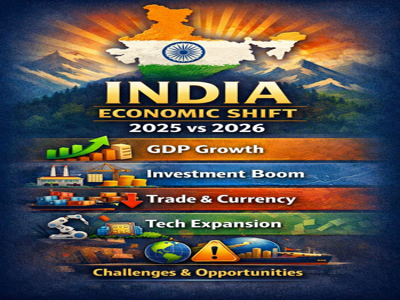
Here is a clear, original, and structured explanation of the Economic Shift in India from 2025 to 2026, with comparisons, facts, and analysis (useful for assignments or notes). The economic shift reflects India’s effort to strengthen infrastructure, digital economy, manufacturing capacity, and global economic integration while managing challenges such as trade deficits, currency pressure, and global geopolitical risks.
Introduction on Economic Shift in India
India’s economy has undergone a significant transformation between 2025 and 2026 due to changes in growth patterns, inflation control, investment trends, global trade conditions, and technological expansion. During this period, India continued to remain one of the fastest-growing major economies in the world, but the structure of growth began shifting from consumption-led expansion to investment-driven development.
GDP Growth Comparison (2025 vs 2026)
| Year | GDP Growth Rate | Economic Situation |
|---|---|---|
| 2025 | Around 6.5% | Recovery phase after global slowdown |
| 2026 | Around 7.4% | Stronger domestic demand and investment |
India’s GDP growth accelerated from about 6.5% in 2025 to around 7.4% in 2026, indicating stronger economic activity across manufacturing, services, and infrastructure sectors.
Key reasons for higher growth in 2026
-
Increased government capital expenditure
-
Strong domestic consumption
-
Growth in services exports
-
Rising private investment
Structural Shift in Growth Pattern
2025 Economy
The economy in 2025 was largely consumption-driven, where household spending and service sector activities played a major role in economic expansion.
2026 Economy
In 2026 the growth model shifted toward investment-led development, especially through:
-
Infrastructure projects
-
Manufacturing expansion
-
Digital economy growth
-
Government capital expenditure
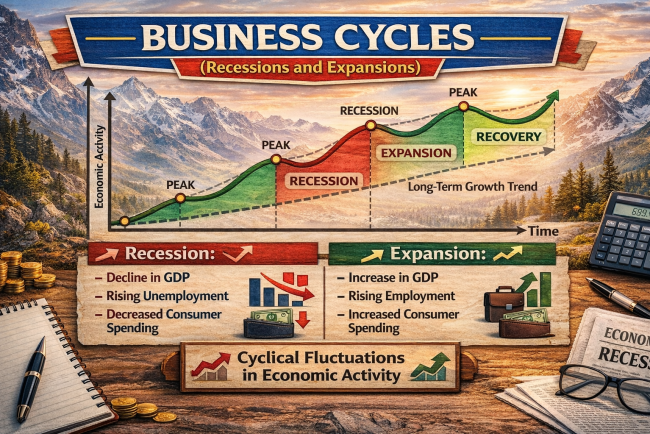
This shift is considered a structural transformation rather than a temporary growth cycle.
Inflation Trends
| Year | Inflation Trend |
|---|---|
| 2025 | Inflation gradually declined |
| 2026 | Mostly stable but vulnerable to global shocks |
India experienced declining inflation during 2025, with consumer price inflation falling sharply compared to earlier levels.
However, in 2026 inflation risks increased slightly because of:
-
Rising global oil prices
-
Currency depreciation
-
External geopolitical tensions.
These external factors may influence India’s price stability and trade balance.
Employment and Labour Market
| Indicator | 2025 | 2026 |
|---|---|---|
| Unemployment Rate | ~4.7% | around 5% |
India’s unemployment rate slightly increased in early 2026 compared with late 2025 levels.
Reasons include:
-
Slow job creation in some industries
-
Automation and technology adoption
-
Structural transformation of the economy.
However, new jobs are being created in:
-
IT and digital services
-
Infrastructure
-
Manufacturing and global capability centers.
Industrial and Manufacturing Growth
Industrial activity improved significantly in 2026.
India’s Index of Industrial Production (IIP) recorded around 4.8% year-on-year growth supported by manufacturing and electricity sectors.
Key manufacturing drivers
-
Production Linked Incentive (PLI) schemes
-
Expansion of electronics and semiconductor industries
-
Growth of renewable energy manufacturing.
This reflects India’s strategy to become a global manufacturing hub.
External Trade and Current Account
| Indicator | 2025 | 2026 |
|---|---|---|
| Trade deficit | High | Increased further |
| Current account deficit | Moderate | Around 1.3% of GDP |
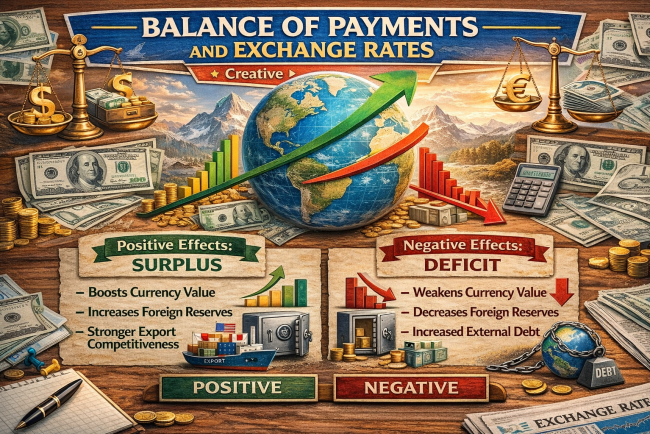
India’s current account deficit widened due to a larger merchandise trade gap, especially because of high imports of gold and energy.
However, the deficit was partly offset by:
-
Strong services exports
-
Rising remittances from overseas workers.
Currency and Financial Market Shift
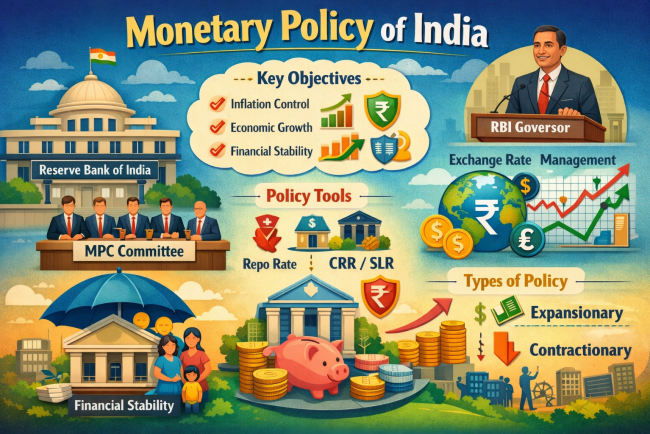
In 2026 the Indian rupee faced pressure due to global geopolitical tensions and capital outflows.
The rupee reached a record low against the US dollar, reflecting vulnerability to oil price increases and global risk sentiment.
This created challenges such as:
-
Higher import costs
-
Inflation risks
-
pressure on foreign reserves.
Technology and Investment Expansion
A major economic shift between 2025 and 2026 is the expansion of global technology companies in India.
Many multinational firms expanded their engineering and research centers in India due to:
-
Skilled workforce
-
digital infrastructure
-
competitive costs.
This development strengthens India’s position as a global innovation hub.
Government Policy Changes
Several policy measures supported economic growth during this period:
Major policy drivers
-
Higher public infrastructure spending
-
Production Linked Incentive schemes
-
Digital economy expansion
-
Financial sector reforms
-
focus on “Viksit Bharat 2047†development strategy
These policies aim to sustain 7% long-term growth potential for the Indian economy.
Sectoral Transformation
| Sector | 2025 Trend | 2026 Trend |
|---|---|---|
| Agriculture | Stable growth | Technology adoption |
| Manufacturing | Moderate growth | Strong expansion |
| Services | Dominant sector | Continued leadership |
| Technology | Growing | Global innovation hub |
India’s services sector remains the largest contributor, but manufacturing and infrastructure are gaining greater importance.
Challenges Facing the Economy in 2026
Despite strong growth, several risks remain:
-
Global geopolitical tensions
-
Rising oil prices
-
Currency volatility
-
Trade deficit expansion
-
employment generation challenges.
Managing these risks is essential to maintain long-term growth stability.
Conclusion
The period between 2025 and 2026 marks an important transition phase for India’s economy. While 2025 focused on post-pandemic recovery and consumption-led growth, 2026 represents a shift toward investment-driven and structurally stronger economic development.
Higher GDP growth, expanding manufacturing, rising infrastructure spending, and increasing global investment indicate a positive trajectory for the Indian economy. However, external risks such as trade imbalances, currency pressure, and global economic uncertainty remain significant challenges.
Overall, India’s economic transformation during this period reflects its ambition to become a major global economic power and achieve long-term sustainable growth.
What's Your Reaction?