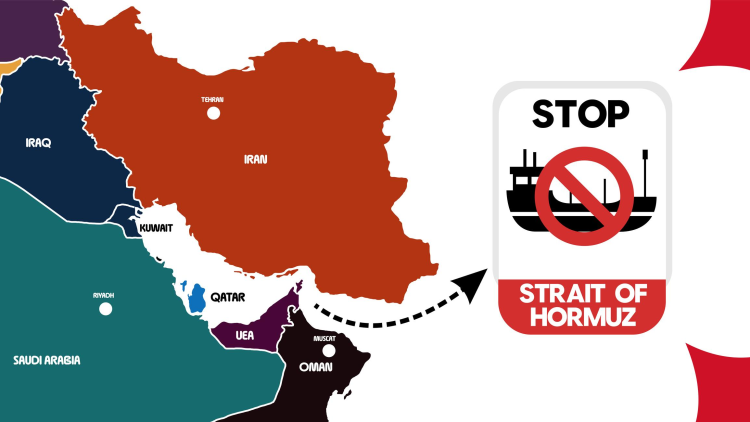
A reported US blockade of Iranian ports at the Strait of Hormuz could inflict economic losses of up to $435 million (₹4,081 crore) per day, according to a Wall Street Journal report, as tensions between Tehran and Washington escalate.
The disruption threatens the flow of oil, fertiliser, food, and other goods, potentially driving further inflation. However, analysts caution that the actual impact depends on key uncertainties—such as the effectiveness of the blockade and Iran’s ability to reroute exports via the Jask terminal, located outside the Hormuz chokepoint.
In the short term, losses may be cushioned by Iran’s floating oil reserves, estimated at 154 million barrels outside the affected Gulf region as of late March (Kpler data).
According to former US Treasury official Miad Maleki, the projected daily losses include approximately $276 million in lost exports, primarily crude oil and petrochemicals. These estimates assume Iran exports 1.5 million barrels per day at $87 per barrel, with over 90% of shipments passing through Kharg Island in the Persian Gulf.
How Trump's Blockade Could Work?
Trump threatened to impose the blockade after talks to further a fragile ceasefire ended without a deal this past weekend. Iran had previously halted nearly all tanker traffic through the key waterway, allowing only some ships perceived as friendly to pass while charging considerable fees.
The point of the US blockade is to maximise pressure on Iran by strangling its cash flow from the energy trade.
According to Marc Thiessen, columnist and former White House Director of Speechwriting, the blockade accomplishes virtually the same thing as would a military operation to seize Kharg Island-- through which almost all of Iran's oil passes. However, he opined that the blockage would inflict similar damage to the Iranian economy without the risks involved in deploying US ground forces -- likely shutting down Iran's oil exports and cutting off its energy revenue.
Moreover, by blocking Iran's energy exports to China, which gets 45 to 50 per cent of its crude oil and 30 per cent of its liquefied natural gas imports through the strait, Trump can also give Beijing an incentive to join him in that pressure campaign.
However, successfully enforcing the blockade will require a sustained commitment of US Navy ships and personnel, as well as clear guidance from the Trump administration and the Navy's legal department, according to a report by Associated Press.
How The US Plans To Enforce The Blockade
The US has 16 warships in the Middle East, but according to an AP report, no warships are in the Persian Gulf -- the body of water that forms most of Iran's coastline.
Moreover, a notice to mariners about the military's plans said access to Iranian ports is being restricted, but the ways these measures "will be applied in practice ... are in development".
The biggest challenge for US forces will be the enormous volume of shipping traffic that usually transits the Strait of Hormuz, where nearly 20 per cent of the world's traded oil passes in peacetime.
A considerable number of ships may be needed to enforce the restrictions, said Sidharth Kaushal, a naval power expert at the Royal United Services Institute, a defence and security think tank in London.