Iran-Israel War LIVE: Trump Threatens ‘Higher-Level’ Bombing Over Strait of Hormuz
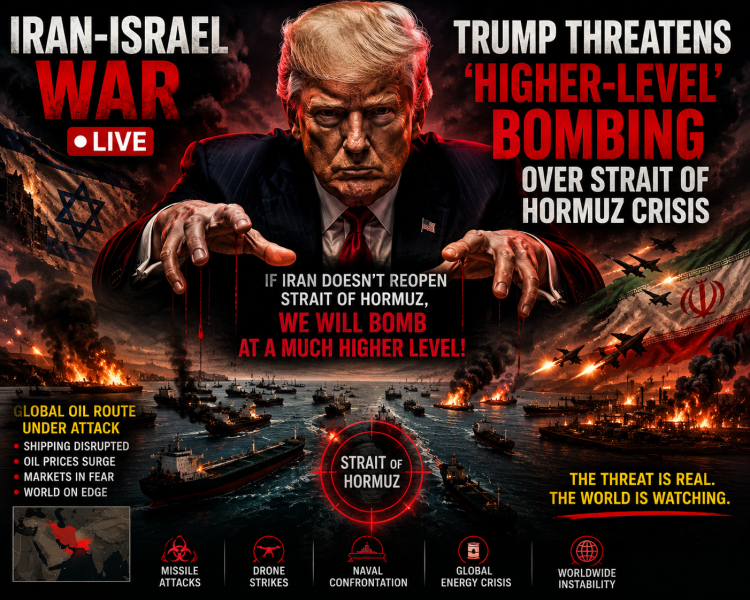
The Middle East crisis has entered another dangerous phase as U.S. President Donald Trump warned Iran that the United States could launch bombing attacks at a “much higher level and intensity” if Tehran refuses to reopen the Strait of Hormuz. The warning came amid growing reports that the U.S. and Iran are attempting to negotiate a temporary agreement to reduce tensions and restore global oil shipping routes.
ALSO READ |Iran and Strait of Hormuz: A lone battle for control
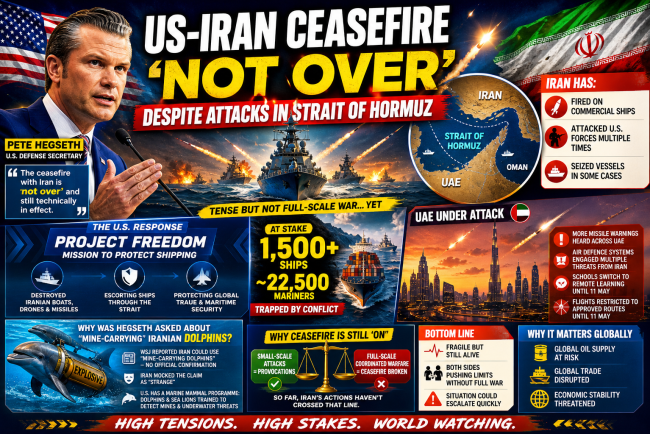
US. President Donald Trump has suspended “Project Freedom,” to escort ships through the Strait of Hormuz, claiming progress in negotiations with Iran toward an agreement to end the war. In a post on Truth Social, Mr. Trump said, “Great progress has been made toward a complete and final agreement with representatives of Iran.” Tensions had been soaring over the Hormuz operation, with the United States saying it had sunk seven Iranian boats, and several civilian vessels coming under attack, allegedly from Iran.
Why the Strait of Hormuz Matters
The Strait of Hormuz is one of the most strategically important waterways in the world. Located between Iran and Oman, it connects the Persian Gulf to global shipping lanes. Nearly one-fifth of the world’s oil supply traditionally passes through this narrow route. Any disruption immediately impacts oil prices, shipping insurance, and global trade.
Since the escalation of the Iran war earlier this year, Iran has effectively restricted or controlled movement through the strait. The Iranian Revolutionary Guard Corps reportedly warned vessels that unauthorized passage would not be allowed.
As a result:
- Global oil prices surged
- Hundreds of commercial ships became stranded
- Shipping insurance costs sharply increased
- International trade routes faced delays and uncertainty
Experts believe the closure created one of the biggest energy security crises in recent years.
Trump’s New Warning to Iran
In a social media statement, Trump claimed the war could end soon if Iran accepts a U.S.-backed proposal. However, he added a direct threat that if Tehran refuses, American bombing operations would restart at a far greater scale.
According to reports:
- The U.S. wants Iran to reopen the Strait of Hormuz
- Washington is pushing for restrictions on Iran’s nuclear program
- Discussions may include sanctions relief and release of frozen Iranian funds
- The U.S. military operation known as “Epic Fury” could officially end if negotiations succeed
Trump’s statement increased fears that the fragile ceasefire could collapse at any moment.
What Is “Project Freedom”?
The United States launched a naval operation called “Project Freedom” to escort merchant ships through the Strait of Hormuz safely. The operation involved:
- U.S. naval warships
- Air defense support
- Drone surveillance
- Destruction of Iranian boats and threats near shipping lanes
The mission aimed to restore international shipping traffic and prevent Iran from using the strait as leverage against global markets.
Reports suggest the operation temporarily succeeded in helping some ships cross safely, but the route remains highly dangerous. Hundreds of vessels are still trapped in the region.
Trump recently paused “Project Freedom,” saying there had been “great progress” toward a possible peace agreement with Iran.
Rising Fear Across the Gulf Region
The crisis is not limited to Iran and the United States. Gulf countries such as the United Arab Emirates have also faced missile and drone threats.
The UAE reportedly activated air defense systems after detecting ballistic missiles, cruise missiles, and drones linked to Iran. Schools shifted to remote learning, and airspace restrictions affected flights across the region. These developments highlight how quickly the conflict could spread into a broader regional war.
Security analysts warn that if the Strait of Hormuz remains unstable:
- Global fuel prices could rise dramatically
- Inflation may worsen worldwide
- Supply chains could face serious disruptions
- Military confrontation could expand beyond the Gulf
China’s Role in the Crisis
China has emerged as an important diplomatic player because of its close economic relationship with Iran. Chinese officials recently met Iranian diplomats in Beijing and called for a comprehensive ceasefire.
The Trump administration is reportedly urging China to pressure Iran into reopening the Strait of Hormuz. Secretary of State Marco Rubio said Beijing should tell Iran that its actions are isolating the country globally.
Many analysts believe China’s involvement could become critical in preventing a wider war.
Humanitarian and Economic Impact
The conflict has already caused significant humanitarian and economic damage:
- Thousands reportedly killed during months of fighting
- Tens of thousands of civilians affected by disruptions
- Oil shipments delayed
- Shipping companies avoiding Gulf routes
- International markets reacting nervously to each escalation
Insurance costs for tankers passing through the Strait of Hormuz have also increased dramatically, making transportation far more expensive.
International Law Concerns
Some legal experts argue that threats to target civilian infrastructure, ports, and energy facilities could violate international law. Analysts cited by several reports warned that attacks on power plants or civilian infrastructure may amount to war crimes if civilians are heavily affected.
At the same time, U.S. officials insist their actions are necessary to protect global trade and maintain freedom of navigation in international waters.
What Happens Next?
The coming days could determine whether the region moves toward diplomacy or a much larger military confrontation.
Possible outcomes include:
- A temporary peace agreement between Washington and Tehran
- Reopening of the Strait of Hormuz
- Resumption of U.S. bombing campaigns
- Expansion of conflict involving Gulf nations
- Global oil and economic instability
For now, the ceasefire remains fragile. While negotiations continue behind closed doors, military forces on all sides remain on high alert.
The world is watching closely because what happens in the Strait of Hormuz does not stay in the Middle East — it affects fuel prices, trade, and economic stability across the globe.
What's Your Reaction?